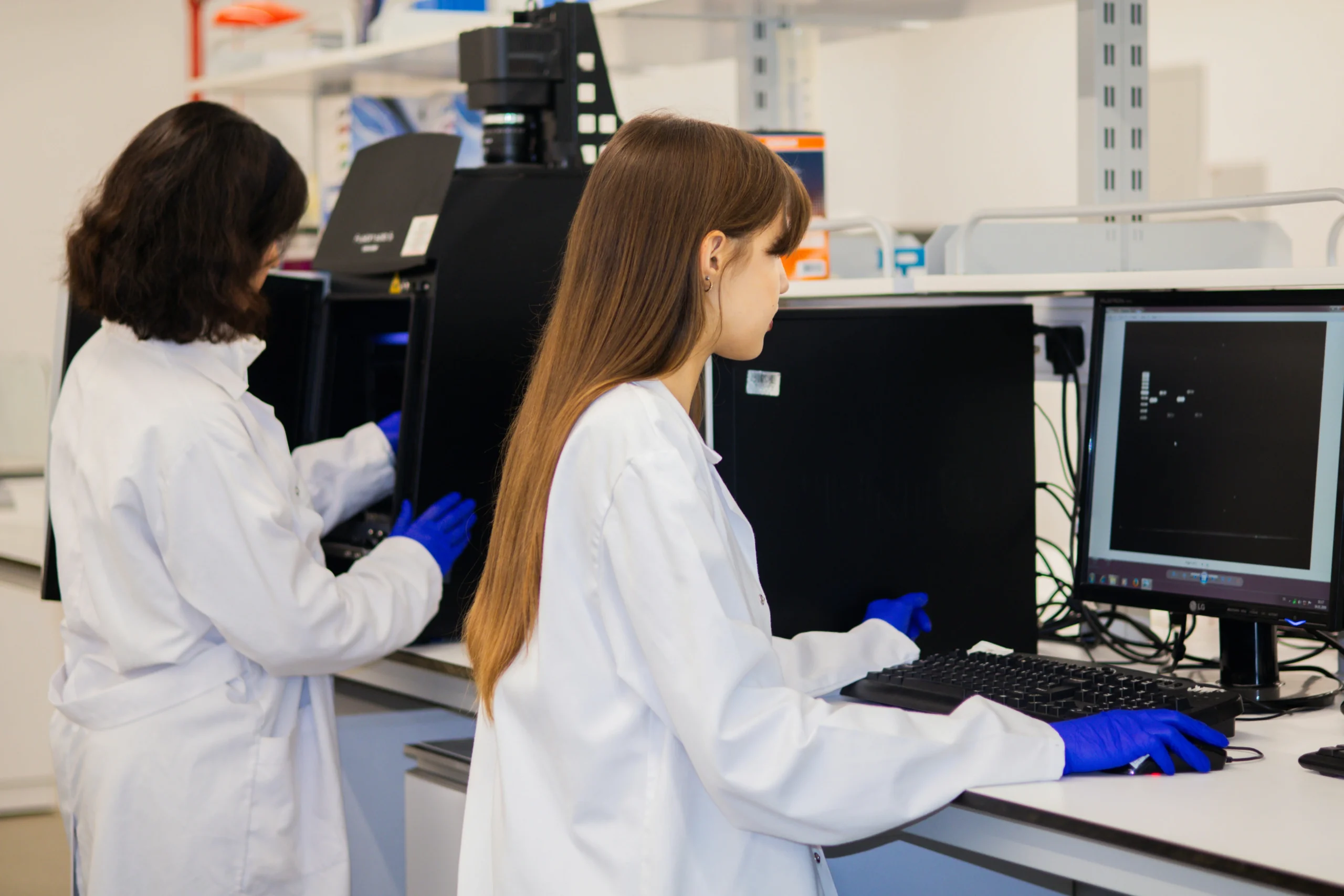
An advanced research platform integrating clinical, genomic, and imaging data to enable accurate early disease detection through intelligent systems, supporting healthcare professionals and improving patient outcomes globally.
Early and accurate disease detection remains a critical challenge in modern healthcare, directly impacting survival rates, treatment effectiveness, and costs. Traditional diagnostic methods relying on isolated clinical, imaging, or genomic data often fail to capture early-stage disease complexity. This research proposes a multi-modal deep learning framework integrating clinical, genomic, and imaging data for precise early detection. Using architectures like CNNs, RNNs, and autoencoders, the system extracts and fuses complex features into a unified predictive model. Advanced preprocessing ensures robustness against noisy and high-dimensional data. Explainable AI techniques such as SHAP and Grad-CAM enhance transparency. The model aims to improve diagnostic accuracy, support personalized treatment, and advance precision medicine through scalable and clinically applicable AI solutions.
A structured overview of system functionalities from data acquisition to intelligent decision support
Scalable multi-modal disease detection framework supporting progressive integration across medical domains
Expansion phase after 24 months enabling real-time data acquisition from medical devices and external systems
Establish secure APIs, IP-based connectivity, and data exchange protocols.
Connect hospital systems, EHR platforms, and third-party healthcare software.
Integrate diagnostic machines (MRI, CT, Lab devices) via network protocols.
Enable automated real-time data ingestion and continuous model updates.
Fully connected AI-driven healthcare ecosystem with global data synchronization.
MRI, CT, X-ray, Lab Machines
IP Connectivity, Secure Data Transfer
APIs, Middleware, Data Standardization
Real-time Analysis & Prediction
Hospitals, Doctors, Organizations
Progressive integration of Clinical, Genomic, and Imaging data with phased implementation strategy
Data Collection Setup
Processing & Cleaning
Model Training
Full Deployment
Initial Integration
Feature Extraction
Fusion with Clinical
Initial Setup
Model Training (CNN)
Full Multi-Modal Fusion
BioAIInsights creates a unique ecosystem where organizations can participate in a scalable, AI-driven healthcare platform. Hospitals, diagnostic centers, pharmaceutical firms, and financial institutions can leverage data-driven insights to enhance services, reduce operational costs, and unlock new revenue streams. Through strategic collaboration, partners gain access to advanced analytics, early disease detection capabilities, and long-term growth opportunities, positioning themselves at the forefront of next-generation digital healthcare transformation.
To build a globally scalable healthcare intelligence system that integrates multi-modal data, enabling early disease detection while creating long-term value for investors through innovation, expansion, and technology-driven healthcare solutions.
To expand from single-disease models to multi-disease platforms, integrating diverse data sources and technologies, ensuring sustainable growth, increasing adoption, and generating strong returns for stakeholders and research partners.
Global healthcare reach and adoption growth
Multi-channel income through AI healthcare services
SENIOR LECTURER
Faculty of Computer Science and Information Technology
Computer Science graduate with expertise in software development, data analytics, and AI, complemented by experience as a Server Manager and DevOps Engineer. Skilled in building, deploying, and maintaining scalable systems, with a strong interest in research-driven innovation in machine learning and NLP. Combines technical proficiency with entrepreneurial experience to design efficient, data-driven solutions. Focused on bridging theory and practice to solve complex, real-world problems through intelligent systems.
The research team combines lead expertise, supporting researchers, and multidisciplinary professionals including medical, technical, and analytical experts to collaboratively develop, validate, and scale intelligent healthcare solutions effectively.
Empowering research advancement through funding, collaboration, and impactful healthcare innovation initiatives.
Rated on WIPO
High innovation impact with global benchmarking
Rated on WHO
Strong healthcare performance aligned with global standards


Strategic investors gain access to scalable healthcare innovation, leveraging AI-driven data systems to generate sustainable returns, expand market reach, and lead advancements in next-generation medical technologies.


Discover how advanced data fusion improves diagnosis accuracy, accelerates treatment decisions, enhances patient outcomes, and transforms modern healthcare systems globally.
Combine clinical, genomic, and imaging data to generate deeper insights and improve diagnostic precision across complex healthcare scenarios.
Explore a wide range of advantages that enhance efficiency, accuracy, scalability, and innovation in modern AI-powered healthcare ecosystems.
Choose a plan tailored to your needs and scale with powerful AI-driven healthcare solutions.
Access advanced tools, insights, and support to enhance diagnostics and improve patient outcomes effectively.
Essential tools for early exploration
Integrated intelligence for smarter decisions
Complete solution for enterprise transformation
Transform your organization with cutting-edge AI solutions designed for early detection, smarter decisions, and better outcomes. Start today and lead the future of healthcare innovation.
Get clear solutions to your queries with detailed explanations.
Save time with quick, reliable answers to important concerns.
It addresses the limitation of single-source diagnostics by integrating clinical, genomic, and imaging data to enable earlier and more accurate disease detection.
Unlike traditional models, this framework uses multi-modal deep learning, capturing hidden relationships across diverse data types for higher predictive accuracy.
The system requires clinical records, genomic data, and medical imaging, sourced from hospitals, research databases, and public datasets with proper approvals.
Data will be anonymized and handled under strict compliance with healthcare regulations (e.g., GDPR/HIPAA standards), ensuring confidentiality and ethical use.
Improved early detection accuracy, identification of new biomarkers, enhanced clinical decision-making, and support for personalized medicine.
The framework is designed to be modular and scalable, allowing integration of new diseases and adaptation to diverse patient populations.
ROI comes from reduced diagnostic costs, improved treatment efficiency, faster decision-making, and potential commercialization of AI-driven healthcare solutions.
By integrating Explainable AI (XAI) methods like SHAP and Grad-CAM, clinicians can understand how predictions are made.
Key challenges include data heterogeneity, integration complexity, regulatory compliance, and the need for large, high-quality datasets.
Organizations can contribute by providing data, funding, technical expertise, or participating in pilot deployments and validation studies.
Personalized care focuses on tailoring treatment plans to individual patient profiles by analyzing genetic makeup, medical history, and imaging data. This approach ensures that each patient receives the most effective therapy based on their unique condition. It improves treatment outcomes, reduces side effects, and represents a major shift toward precision medicine.
Smart decision-making leverages AI-driven insights to assist healthcare professionals in making faster and more accurate clinical judgments. By processing large-scale data in real time, the system provides risk scores, diagnostic suggestions, and treatment recommendations. This reduces uncertainty, minimizes human error, and supports evidence-based medical decisions.
Multi-modal data integration combines diverse healthcare data types—such as electronic health records, genomic sequences, and medical imaging—into a unified analytical framework. This fusion allows AI systems to uncover deeper correlations that single-source analysis cannot detect. It enhances diagnostic accuracy, supports comprehensive patient profiling, and provides a holistic understanding of complex diseases.
Early detection is one of the most critical advantages of integrating clinical, genomic, and imaging data. By analyzing patterns across multiple data sources, AI models can identify subtle abnormalities long before visible symptoms appear. This enables proactive intervention, reduces disease progression, and significantly improves survival rates, especially in conditions like cancer, cardiovascular disorders, and neurological diseases.
Improved Accuracy — Enhance diagnostic precision with advanced algorithms
Faster Diagnosis — Reduce time required for disease detection
Early Intervention — Identify risks before disease progression
Data Integration — Combine multiple healthcare data sources
Risk Prediction — Forecast potential health complications early
Clinical Efficiency — Optimize workflows for healthcare professionals
Cost Reduction — Lower operational and treatment expenses
Better Outcomes — Improve patient recovery and survival rates
Real-Time Insights — Access instant data-driven recommendations
Scalable Systems — Adapt solutions for growing healthcare needs
Automation Support — Reduce manual effort in diagnosis
Enhanced Research — Enable deeper medical research insights
Precision Medicine — Deliver personalized treatment strategies
Predictive Modeling — Anticipate disease progression patterns
Decision Support — Assist doctors with AI-driven suggestions
Data Visualization — Present complex data in clear formats
Remote Access — Enable telemedicine and remote diagnosis
Workflow Optimization — Improve hospital operational efficiency
AI Integration — Seamlessly integrate into existing systems
Patient Monitoring — Track health continuously and effectively
Error Reduction — Minimize human diagnostic errors
Smart Alerts — Notify critical conditions instantly
Secure Data Handling — Ensure patient data protection
Cross-Platform Access — Use across multiple healthcare systems
Innovation Enablement — Drive technological advancements in healthcare
Global Accessibility — Expand healthcare reach worldwide
Resource Optimization — Utilize medical resources efficiently
Continuous Learning — Improve models with new data
Adaptive Systems — Adjust to different healthcare environments
Future Readiness — Prepare for next-generation healthcare solutions
At its heart, your research creates:
👉 This is not just a tool — it’s a platform-level innovation that can power multiple industries.
Integrative Deep Learning Models for Multi-modal Medical Data Fusion: A Review.
IEEE Transactions on Neural Networks and Learning Systems, 36(7), 1452–1473.
Focuses on fusion of genomic, imaging, and clinical data for precision diagnostics.
Deep Cross-Modality Learning for Early Cancer Detection Using Radiogenomic Features.
Artificial Intelligence in Medicine, 150, 102615.
Explores CNN-RNN hybrid architecture for combining imaging and genomic features.
Explainable Multi-modal Deep Learning for Clinical Decision Support.
Nature Machine Intelligence, 6(2), 234–247.
Discusses XAI integration with multi-modal healthcare data.
Federated Multi-modal Deep Learning for Privacy-preserving Healthcare Applications.
Frontiers in Digital Health, 5, 11987.
Addresses privacy and data security for multi-institutional learning.
A Unified Deep Learning Framework for Multi-modal Data Integration in Precision Medicine.
Bioinformatics Advances, 4(3), 122–135.
Proposes scalable architectures for integrating imaging, omics, and EHR data.
The aggregation and integration of clinical, genomic, and imaging data with deep learning technology is likely to yield a variety of outcomes which can ultimately enhance patient outcome while enabling early detection of disease. By combining various sources of data, this proposed study will address the limitations of traditional diagnostic methods and will provide a more comprehensive and accurate framework for predicting the development of disease.
1. Improved Predictive Accuracy:
The increased accuracy of detecting disease at an early stage is one of the most important potential outcomes. Given multi-modal data fusion, it is expected that the model is able to capture complex relationships between imaging patterns, genetic variations and clinical features. With increased sensitivity and specificity in diagnosing early diseases like cancer, heart disease, neurological disorders, this integrated model is bound to be more accurate than single-modality models.
2. Identification of Key Biomarkers:
The study expects to find different combinations of features and new biomarkers with a high relationship with early diagnose of disease. Exploring contributions of genomic variations, imaging attributes and clinical parameters shows that the study can characterize important indicators that would be unnoticeable in single analysis studies. These revelations may allow guidance for future discernible clinical research and the design of personalized treatment plans.
3. Development of an Interpretable Model:
It is envisaged that from the study work, the deep learning model will be able to achieve better interpretability due to the use of intelligent explainable AI methods. Physicians will be able to understand the reason behind the predictions, whether it’s which imaging pattern, a genomic marker, or a clinical characteristic that had the biggest contribution in determining the risk of a disease. In reality, such transparency is key to building trust and generating adoption in healthcare sites.
4. Robust Multi-Modal Framework:
It is expected that the proposed methodology will provide a robust framework that will be capable of handling high-dimensional, heterogeneous and incomplete and quality datasets. The model will generalize well across different patient groups and types of diseases if statistical techniques of data preprocessing and integrating them are implemented.
5. Support for Precision Medicine:
The results obtained from this research work may contribute to precision medicine initiatives as it allows for early diagnosis and provides personalized risk profiles to patients. Using the framework, clinicians should be better able to make prompt and individualized decisions with suggestions for prevention or intervention to shorten a regimen and improve patient outcomes.
6. Contribution to Research and Clinical Practice:
It is expected that the study will set the basis for further research on multiple of the areas of application of AI in healthcare. Such an outcome matrix can be useful for development of integrated diagnostic systems and provide a roadmap for the development of predictive models for other diseases. It will also emphasize good practice in clinical implementation, privacy protection, and ethical handling of data.
Our study has the potential to lead to highly accurate diagnostics, novel biomarkers, clinically interpretable predictive models and a high-value multi-modal framework for ensuring benefits of proactive and personalized healthcare.
The aim of the methodology of this study is therefore to develop a deep learning framework for early detection of disease by the combination of images, genomic, and clinical data. In order to overcome the problem of multiplicity data integration, interpretability, and clinical applicability, a methodical approach with data gathering, data preprocessing, model building, model training, model validation and evaluation steps is employed in this study.
1. Data Collection:
Three main types of data will be collected for the study:
2. Data Preprocessing and Integration:
Given clinical, genomic, and imaging data are so heterogeneous, preprocessing is critical. Steps will include:
3. Model Development:
To be able to capture intricate relationships between the three types of data, a multi-modal deep learning framework will be created. Among the components of the model include:
4. Model Training and Validation:
5. Model Evaluation:
Metrics: accuracy, sensitivity, specificity, precision, recall, F1-score and AUC-ROC will be for assessment of performance The advantages of fusion of data will be illustrated through comparing the multi-modal and single-modality models.
6. Interpretability and Ethical Considerations:
To interpret the predictions of the models and to emphasize the really important features, explainable artificial intelligence techniques such as Grad-CAM and SHAP (-shirted attributive exPlanations) models will be deployed. Anonymization and the satisfaction of legal requirements will ensure data privacy and legal compliance.
This way, both technical rigor and clinical relevance are ensured, as they provide a structured framework for using multi-modal techniques with deep learning for better early detection of the disease.
Since early detection of disease has the potential to save lives by improving patient outcome and reducing health care costs, early disease detection has been a highly popular research topic. Traditional diagnostic methods rely on clinical evaluations and imaging like X-rays, MRIs or CT scans and laboratory testing. Lški 2007 These methods are remarkably effective tool for monitoring advanced stages of disease, however, they often fail to reliably detect subtle changes in early stages, particularly in complex diseases such as cancer, heart disease, and neurological disorders. Restricting diagnostic accuracy has shed light on the limitations of the monolingual strategies, and advocated the integration of multiple data exploitation in order to tackle these issues (Esteva et al., 2019; Rajpurkar et al., 2018).
As genomic data becomes increasingly powerful, it has enhanced the understanding of disease prognosis, progression and susceptibility. Developments in high-throughput sequencing technologies have opened up the full potential of genomic research by allowing access to a hitherto unprecedented number of genetic variations and molecular markers. There have been many reports on the applicability of genomic data in predicting early biomarkers and risk of diseases (Collins and Varmus 2015; Ashley 2016). However, genomic data is limited in accuracy in prediction, as the burden of diseases depends on biochemical and clinical phenotypic expressions that cannot be accounted for from genomic data.
On the contrary, medical imaging provides valuable morphological and structural information that can facilitate early detection. In particular, convolutional neural networks (CNNs) are deep learning techniques that have shown tremendous success in image-based data analysis for lesion detection and disease classification (Litjens et al., 2017). Despite this, imaging data may not necessarily reflect the molecular etiology of illness.
Recent studies have explored the combination of multi-modal data, and, in particular, the integration of imaging-genomics-clinical information to improve the early detection of disease. From multi-modal approaches to deep learning: the issue is that tasked with multi-modal deep learning frameworks have shown superior predictive performance by extracting complementary information from the differently-structured data that are extracted from heterogeneous datasets (Huang et al., 2020; Miotto et al., 2016). For example, cancer detection has proven that the combined use of genomic profiles and imaging features, when compared with the unidimensional models, can lead to a big increase in the diagnostic accuracy (Cruz & Wishart, 2006; Zhang et al., 2019).
The issues of model interpretability, missing and/or noisy data, high dimensionality, and data heterogeneity are still challenges. In order to overcome these limitations, explainable AI approaches are being researched so they can be brought to clinical use and provide insights to understand how models make their predictions (Samek et al., 2019). Further to this understanding for practical implementation, special focus must be on ethical considerations, specifically concerning privacy of sensitive patient data.
Disease early detection using deep learning-based multi-modal data integration has great potential according to the literature. Furthermore, harnessing the synergy between clinical, genomic and imaging data will enable more accurate, interpretable and clinical actionable diagnostic tools to be developed. This will facilitate preventive and customized healthcare.
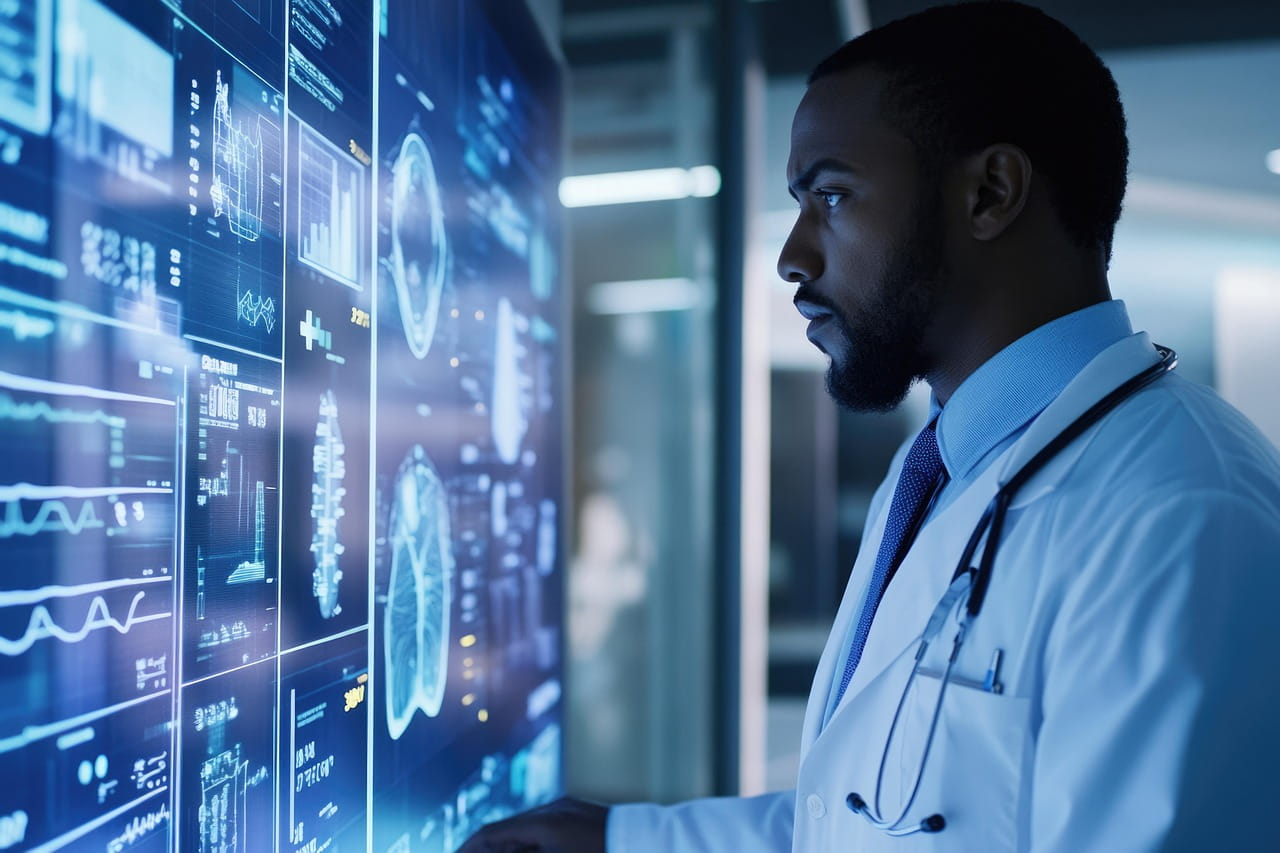
The principal hypothesis formulating this research is that deep learning together with genomic, clinical, and imaging information can revolutionize early discovery of the disease. The hypotheses yield testable statements regarding model performance, interpreability, generalization, and real-world impact, and the research questions are focused on our understanding of the technical, clinical, and ethical challenges associated with multi-modal data fusion.
With this investigation the study intends to:
Enhance the advancement of precision medicine knowledge that enables proactive and personalized medical interventions to the field
This study endeavors to bridge the gap between data-driven predictive modelling and clinical translation in answering these questions and testing these theories. The results have the potential to give rise to a new era of multi-modal precision medicine, enhance patients’ care, and significantly accelerate early disease detection.
One of the most important components of modern healthcare is early detection of disease, where early intervention can have a huge impact on the individual’s outcome along with a reduction in the cost of treatment in the long-term. With advancements in diagnostic tools and most of these tools inadequately diagnosed or under-diagnosed many diseases go undiagnosed even in advanced stages. Traditional approaches typically rely upon single data sources, such as imaging studies, clinical assessments or genomic profiling, which often do not provide a detailed picture of the progression of a disease. For this reason, there is a growing need for combining strategies that can take advantage of different types of data.
Promising ways of multi-modal data analysis are offered by the creation of artificial intelligence and, in particular, deep learning. Deep learning frameworks can locate intricate patterns and relationships that would be difficult to identify in the absence of deep learning algorithms using both clinical, genomic, and imaging data integrated together. These frameworks could help in the provision of individualized treatment plans, better earlier and more accurate predicting, and improved general efficacy of healthcare systems. The production of such frameworks, though, raises several research issues and theories, primarily related to viability, precision, interpretability and the therapeutic value of these frameworks.
The subsequent research questions and related hypotheses to orient the examination of multi-modal deep learning techniques for early disease detection are primarily in the center of this study:
Research Questions
Research Hypotheses
The main focus of this thesis was to develop a deep learning framework that combines imaging, genomic, and clinical information in an efficient way for early discovery of diseases. Hence, the goal of this study is to improve the diagnostic accuracy, pave the way for a personalized care model, and realize proactive healthcare interventions via employing the strengths of multi-modal data. A summary of the main objectives of the study was as follows:
Develop a Multi-Modal Deep Learning Framework:
Handle Heterogeneous and High-Dimensional Data:
Increase the Predictivity Accuracy:
Existing Methods Comparative Activity Study:
Enhance Model Interpretability:
Solving Data Quality Problems:
Support Precision Medicine:
Encourage Preventive Healthcare:
Advance Research in Multi-Modal AI for Healthcare:
The diagnosis of complex diseases remains to be a significant health care problem despite tremendous progress in medical diagnostics. Initial phases of numerous life-threatening diseases (e.g., cancer, cardiovascular diseases, and neurological diseases) often progress asymptotically, and it is difficult to make a timely diagnosis. Conventional methods of diagnosis are imaging, laboratory tests, and a medical evaluation. Although these approaches are relatively successful, they often fail to capture the underlying genetic and/or molecular changes occurring prior to the appearance of symptoms. Baying such a result, clinicians may fail to notice early warning signs that may lead to delayed intervention, poor patient outcomes, and increased treatment costs.
Advancements in high-throughput genomic technologies in recent years have allowed obtaining detailed genomic information per patient, revealing disease normality and potential therapeutic targets. Similarly, clinical data including patient history, laboratory results and vital signs gives context to disease progression and comorbidities and medical imaging gives spatial and morphological data of tissues and organs. Although each of these data types provides information that indicates significant insights on its own, it does not create a complete view for that data analytical question. For example, clinical information may represent progress in symptomatic phenotypes; structural changes observed on imaging without realizing the underlying molecular processes; and genomic information may show diaph prepares for without revealing regarding contemporaneous disease phenotypes.
Due to these reasons, because of scale, format, and complexity differences, the integration of these different and heterogeneous data sources is extremely complicated. However, conventional statistical techniques are limited in their predictive power when complex interdependencies and high dimensional data are of interest. Analysis is further obscured by patient population variations, data quality and recording standards. These challenges highlight a serious gap in the state-of-the-art diagnostic methods as well: the lack of available robust models that can simultaneously analyze multi-modal information and effectively make early disease diagnoses.
In this respect, artificial intelligence – specifically deep learning – holds the promise of automatic generation of intricate patterns using huge and diverse sets of data. However, deep learning can not be easily extended to multi-modal healthcare data. Existing models are clinical utility limited as they are often focused on a single data type or fail to include the interaction of several modalities. Rather, adoption remains substantially limited by challenges of model interpretability, generalizability and integration into clinical workflows.
So, innovative approaches that do effectively integrate clinical, genomic and imaging information are needed urgently to advance early disease detection. Deep learning frameworks which can help integrate multi-modal information could be used to enable personalization of interventions, improved predictability and comprehensive characterization of patients. By restoring the focus of healthcare from the reactive treatment to the proactive management of the disease process, a resolution to this problem could go a long way towards transforming preventive medicine, reducing delays in diagnosis, and ultimately, enhancing patient outcome.
Since a late diagnosis often leads to impaired patient development and increased costs of healthcare, early and correct disease detection remains a major challenge in modern Healthcare. Conventional methods for diagnosis are largely imaging and clinical assessment which, while useful, are often inadequate to capture the full complexity of disease mechanism. Large varieties of patient-specific genetic information have been made available by advances in genomics and high throughput molecular profiling, creating the new opportunities for understanding disease prognosis, progression and susceptibility. But due to their high dimensionality, complexity and heterogeneity, integrating these multi-mode data is not easy and presents formidable analytical challenges (genomic sequence, imaging studies and clinical records).

Deep learning in particular, as a recent advancement in the field of artificial intelligence, provides strong tools to address these issues. Predictive modelling exceeding traditional statistical modelling techniques is made feasible by deep learning algorithm models, which are defined as having an ability to automatically glean complex patterns and representations out of massive data libraries. Comprehensive disease signatures can be created by fusion multi-modal data based on deep learning, combining imaging features, genomic collaborative variation and clinical parameters. These integrative analyses have the potential to identify new biomarkers for carriage of new diseases early on as well as better precision of diagnosis and even individualized treatment plans.
Combining clinical, genomic and imaging data to improve characterization of the disease and contribute to precision medicine initiatives, thanks to the enabling of individual level predictive modelling. For example, such multi-modal approach can be very helpful in early detection of complex conditions such as cancer, cardiovascular diseases and neurodegenerative disorders. Data standardization, privacy concerns, interpretability of deep learning models, and the need for large, diverse datasets to ensure robustness are some of the challenges that remain in spite of the potential.
The aim of this research is to explore the development of deep learning, which helps to combine imaging, genomic, and clinical data used to identify illnesses at an early stage. The aim of this research is to optimize patient outcomes, reduce the time to diagnosis and promote predictive healthcare without relying on just one data source by harnessing the synergy of these complementary data sources.